Preventing bed bugs is much different than preventing other kinds of pests. With bed bugs, you typically unknowingly bring them inside yourself after being exposed to them in a high-risk environment.
Therefore, the key to preventing bed bugs is three-pronged: identifying those high-risk exposure scenarios, applying active defense protocols while in those environments, and executing a strict post-exposure decontamination routine once you return home.
Key Takeaways:
- High-risk environments extend far beyond hotels and include multi-unit housing, public transit, communal venues, and secondhand shopping.
- Inspecting key hiding spots and keeping luggage elevated off soft surfaces drastically reduces your chances of picking up stowaways.
- Executing a high-heat laundry cycle immediately upon returning home is one of the most effective ways to destroy bed bugs at every life stage.
- Catching an introduction within a two-week window allows you to isolate the problem before it escalates into a full-scale home infestation.
Every home is vulnerable to bed bugs regardless of cleanliness, making early awareness your best defense against a sudden infestation. Ants, rodents, or roaches usually invade from the outside in search of food or shelter, but bed bugs don’t care about crumbs, yard conditions, or cleanliness. Instead, they are opportunistic hitchhikers that enter your home only when you — or a guest — unknowingly carry them inside after visiting an infested environment.
Because traditional barriers like perimeter sprays or tidy housekeeping won’t keep them out, effective prevention relies entirely on a proactive defense. This guide outlines a practical, three-phase framework designed to stop an infestation before it starts.
Jump to a Section:
- Identifying High-Risk Exposure Scenarios
- How to Protect Yourself in High-Risk Environments
- Post-Exposure Decontamination Protocol
- Bed Bug Prevention FAQs
Prefer to Listen? Our Podcast Hosts Discuss Bed Bug Infestations
Preventing a bed bug infestation is difficult. Our podcast hosts discuss ways to prevent this infestation from getting into your home. For more information, check out our video guide here.
At Arrow Environmental Services, we’re always ready to help you with your pest control needs. Contact us for a free, no obligation quote, or call us at 800-226-3139 to get started today.

Leave your information below and we’ll be in touch shortly. After hours calls will be returned the next business day.
High-Risk Bed Bug Scenarios
Where are you most likely to get bed bugs? Understanding the situations where they’re found is one of the most important things you can do to protect yourself. Bed bugs are opportunistic hitchhikers that rely on human movement to travel. Here’s where you’re most vulnerable and some precautions you can take to reduce the likelihood an infestation takes root.
Overnight & Extended Stay Vectors (Highest Risk)
- Hotels, Motels, and Vacation Rentals: High guest turnover makes temporary lodging the primary vector for bed bugs. Pests hide in headboards, mattress seams, and upholstered furniture, crawling into open luggage or clothing left on the floor or bed.
- Multi-Unit Housing & Dormitories: In apartments, condos, and college dorms, bed bugs travel between units through wall voids, utility line penetrations, and shared hallways.
- Hosting or Visiting Guests: Overnight visits create a two-way risk. Stowaways can arrive in visitor luggage or travel back with you after staying in another home.
Transient & Daily Exposure Vectors (Moderate Risk)
- Public Transportation & Rideshares: Long-distance buses, trains, planes, and rideshares feature fabric seating and carpeted floors where bed bugs drop from luggage and attach to new hosts.
- Communal & High-Traffic Venues: Movie theaters, medical waiting rooms, libraries, and places of worship offer upholstered seating, warmth, and dark environments ideal for transient pests.
- Shared Facilities & Work Environments: High-turnover settings like laundromats, daycares (via stacked backpacks), and public service job sites facilitate indirect transfers through shared folding tables or storage areas.
- Secondhand Shopping: Thrifted clothing, used furniture, mattresses, and garage sale electronics often harbor hidden bugs, nymphs, or eggs in tight crevices.
How to Protect Yourself in High-Risk Environments
When entering a high-risk area, proactive habits significantly reduce the chance of bringing pests home.
Hotel & Rental Room Inspection Protocol
- Isolate Luggage Immediately: Upon entering a room, place all bags directly into the bathroom bathtub or on a hard, non-upholstered luggage rack. Keep bags off the carpet, bed, and upholstered chairs.
- Inspect the Bed’s “Core Four”: Pull back the sheets and mattress protector. Use a flashlight (like the one on your phone) to inspect:
- Mattress seams, piping, and tufts
- Box spring corners and plastic guards
- Behind the headboard (the primary hiding spot)
- Bedside tables and outlets adjacent to the bed
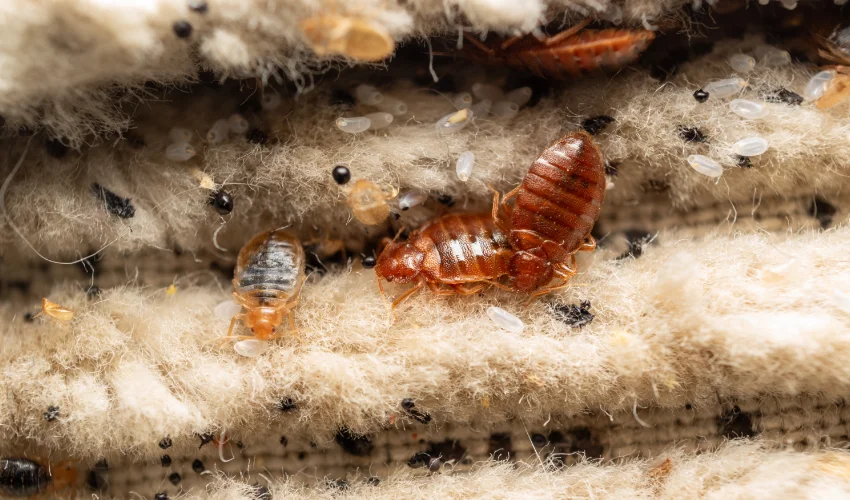
- Identify Physical Evidence: Look for living bugs (apple-seed sized, reddish-brown), shed nymph skins, tiny white sticky eggs, or dark rust-colored fecal spots.
- Keep Luggage Sealed: Keep suitcases zipped shut when not in use. Avoid using wooden hotel dressers; instead, hang clothes or keep them sealed inside your bags.
Precautions for Transit, Public Spaces, and Secondhand Shopping
- Public Transit: Opt for hard plastic or metal seating over fabric when available. Avoid setting soft bags directly on carpeted floors or overhead fabric racks.
- Secondhand Goods: Visually inspect all thrifted items before purchase. Check clothing seams, pocket interiors, and furniture crevices using a bright light. Never bring secondhand upholstered furniture or used mattresses into your home without a professional heat or chemical treatment first.
Post-Exposure Decontamination Protocol
If you suspect you have been exposed to bed bugs, execute this protocol before settling back into your living space.
1. Establish an Entryway Quarantine Zone
Do not bring luggage or exposed items directly into bedrooms or carpeted areas. Unpack outdoors, in a garage, or on a hard entryway floor immediately adjacent to your home’s entrance.
2. Execute the High-Heat Laundry Method
Washing clothes with water alone does not guarantee bed bug mortality, but extreme heat does.
- Transfer exposed clothing directly from your bags into plastic trash bags.
- Dump clothing straight into the dryer.
- Run the dryer on high heat for at least 30 to 45 minutes. The internal temperature must reach at least 120°F (49°C) to kill all life stages, including eggs.
- Wash the clothes afterward if needed, but run the heat cycle first.
3. Decontaminate Non-Washable Gear & Luggage
- Suitcases: Vacuum all interior and exterior pockets, seams, and zippers thoroughly. Immediately seal the vacuum bag or empty the canister into an outdoor trash receptacle.
- Hard Goods: Wipe down hard luggage or non-washable items with rubbing alcohol or disinfectant wipes, paying close attention to wheel wells and seams.
- Steam Treatment: If available, use a commercial garment steamer along the interior and exterior seams of your luggage.
4. Monitor Your Home for Early Signs
For 14 days following potential exposure, monitor your sleeping areas closely for:
- Itchy, red bites that appear in small lines or clusters (often referred to as “breakfast, lunch, and dinner” patterns).
- Small blood spots or dark specks on bed sheets and pillowcases.
- Exoskeletons cast off by growing nymphs.
If you confirm an active infestation, avoid moving to another room to sleep, as this causes the pests to spread throughout the house. Isolate the room and contact a licensed pest control professional immediately—early intervention prevents minor introductions from becoming widespread infestations.
Bed Bug Prevention FAQs
Notify the hotel management immediately and request to be moved to a room that does not share a wall, floor, or ceiling with the infested room. Do not unpack or spread your belongings around the new room. Seal all your clothing and luggage in plastic bags right away, and treat everything as potentially contaminated when you execute your post-exposure protocol upon returning home.
No. Total-release bug foggers (“bug bombs”) generally fail because they cannot penetrate the tight cracks and crevices where bed bugs hide; in fact, the chemical fumes often cause the bugs to scatter deeper into wall voids and adjacent rooms. Standard over-the-counter sprays and essential oils may kill a bug on direct contact, but they lack residual effectiveness, leave eggs unharmed, and will not stop or prevent an infestation.
Bed bugs are remarkably resilient and can survive for several months without a blood meal. Under typical room temperatures (around 70°F or 21°C), adult bed bugs usually live 2 to 4 months without feeding, while older nymphs can survive up to 6 months. In cooler conditions, their metabolism slows down even further, allowing them to survive for up to a year without a host.
Treat the guest room and any shared spaces immediately as potential exposure zones:
- Strip all bedding, curtains, and nearby soft textiles, placing them directly into plastic bags to transport to the dryer for a high-heat cycle (at least 30–45 minutes).
- Vacuum the mattress, box spring, bed frame, carpet edges, and upholstered furniture thoroughly, immediately disposing of the vacuum contents in an outdoor trash bin.
- Inspect the room’s mattress seams, headboard, and bedside outlets weekly for 14 to 21 days for any signs of activity.
Yes. Bed bug interceptors—dual-ring plastic cups placed under each bed post—are highly effective, low-cost monitoring tools. Bed bugs can easily climb the textured outer wall of the trap to reach the bed, but they slip down the smooth inner moat and become trapped. Interceptors allow you to detect an introduction early before a population can establish itself.
Bed-bug-proof mattress encasements serve two main purposes: they trap any existing bed bugs inside so they eventually starve, and they seal off the complex seams, tufts, and deep folds where pests normally hide. While an encasement does not prevent bed bugs from crawling onto your bed, it eliminates their primary hiding spots on the mattress, making them far easier to spot and vacuum up during routine inspections.
Get Fast, Professional Bed Bug Treatment
If you spot signs of bed bugs or suspect you’ve brought stowaways home, don’t wait for a minor introduction to become a major infestation. The experienced bed bug exterminators at Arrow Environmental Services provide targeted, comprehensive heat and chemical treatments designed to eliminate bed bugs at every life stage—guaranteeing your home is completely pest-free.
Contact Arrow Environmental Services today for a free inspection and customized treatment plan.