
Serving Altamonte Springs | Sarasota | Naples | Cape Coral | Tampa | Winter Haven
A full, vibrant lawn can make a property look inviting and well cared for. But aggressive weeds like Crabgrass can quickly cause disruptions, spreading across the yard and creating uneven, thin patches. Removing crabgrass usually involves spot-treating the weed with a targeted herbicide, pulling the plants out manually, or working with lawn care professionals who can manage the problem thoroughly.
This weed grows rapidly in warm seasons and competes with healthy turf for sunlight, water, and nutrients. When left unchecked, it can take over your grass and diminish the overall look of your yard. Below, we’ll cover how to identify crabgrass, the reasons why it appears, effective removal techniques, and practical steps to help keep it from returning.

Get a free, no-obligation quote.
Why is Crabgrass Growing in My Lawn
Several common lawn conditions can make it easier for crabgrass to spread. Understanding these factors can help you maintain a healthier lawn that naturally discourages weeds.
- Cutting grass too short can weaken your turf’s root system and expose more soil to sunlight. This creates ideal conditions for crabgrass seeds to sprout. Maintaining the recommended mowing height for your grass type helps encourage stronger, denser growth.
- Nutrient imbalances in the soil, especially a lack of nitrogen, can make the grass become stressed and thin, leaving open space for weeds to establish. Periodic soil testing and balanced fertilization can help maintain healthier turf.
- Fertilizing at the wrong time, such as in late summer or fall may unintentionally encourage crabgrass growth. Many lawns benefit most from fertilization in early spring or fall, depending on the variety of turf.
- Compacted soil limits airflow and water movement, which weakens grass roots and allows weeds to take hold more easily. Aerating the lawn periodically improves drainage and supports deeper root development.
- Improper watering habits, whether it’s excessive watering or drought, stress and weaken turf. Watering deeply but less frequently encourages stronger roots and makes your lawn more resilient against weeds.
What Does Crabgrass Look Like?
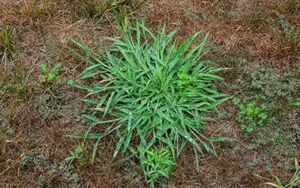
Crabgrass is typically light green with broad blades and spreads outward in circular patches that resemble crab legs. These traits make it easier to distinguish from most lawn grasses.
- Leaf appearance: Unlike many turf grasses that grow in flat blades, crabgrass leaves tend to fold slightly and resemble narrow fingers. They often have a noticeable center vein and a lighter green color.
- Growth pattern: You can often spot crabgrass growing close to the ground in spreading clusters. The stems extend outward from a central point, forming a fan-like shape that may have a reddish base.
- Root structure: Crabgrass develops shallow, fibrous roots rather than deep anchor roots. Because of this, it’s often easier to pull by hand than other weeds when the soil is loose.
Ways to Remove Crabgrass
There are two common methods for dealing with crabgrass that has already appeared in your yard.
Pulling Crabgrass by Hand
Start by loosening the soil around the weed with a small garden tool, such as a trowel or weeding fork. This helps free the roots and makes removal easier.
Once the soil is loose, gently pull the plant out, making sure the entire root system comes with it. Any leftover roots can allow the weed to regrow.
After removal, place the plant in a sealed trash bag rather than composting it. This helps prevent seeds from spreading back into your lawn.
Applying Weed Killing Products
Another option is using herbicides specifically formulated to target crabgrass, without damaging most lawn grasses.
Always read and follow the product instructions carefully. The label will outline the proper application rates, timing, and safety guidelines.
Apply herbicides on days with minimal wind and no rain expected for at least 24 hours. This reduces the risk of drift and helps the treatment work effectively.
When Is the Best Time to Treat Crabgrass?
Timing plays a major role in controlling crabgrass successfully. Treatment is often most effective from late winter through early spring, before the weed begins producing seeds. Addressing the issue early gives your lawn the time to recover and fill in open areas.
6 Ways to Help Prevent Crabgrass From Returning
Keeping your lawn healthy is the most reliable way to keep crabgrass away for good. Consider utilizing these strategies to keep your grass stable:
- Preventative herbicides. Instead of waiting for an issue to arise, consider utilizing preventative herbicides to make a barrier in the soil, which stops crabgrass seeds from sprouting. Always remember to follow the specific product instructions. Applying the treatment too early or too late can make it ineffective, and it’s typically recommended to apply during early spring.
- Follow proper mowing practices. Only cut your lawn at the height recommended for your specific grass type to support strong, healthy growth and deter crabgrass. Maintaining the proper height helps shade the soil surface, which limits the sunlight crabgrass seeds need to sprout. It’s also important to avoid cutting the grass too short, never remove more than one-third of the blade length during a single mowing session.
- Water your lawn mindfully. Water deeply, but less often, to encourage strong root systems in your lawn. A well-established root network helps turf compete with weeds such as crabgrass. In most cases, lawns benefit from about one to two inches of water each week, delivered through one or two thorough watering sessions rather than frequent, light watering.
- Treat for nutrient deficiencies. Routine soil testing can help identify nutrient shortages that may weaken your lawn. Once you know what your soil lacks, applying the proper fertilizer can help restore balance. Grass that receives adequate nutrients grows thicker and stronger, making it able to compete with invasive weeds like crabgrass.
- Overseed thin patches. Open or patchy sections of turf create the perfect opportunity for crabgrass to establish itself. Filling these areas with fresh seed encourages thicker coverage, which naturally crowds out weeds. Select a seed blend that performs well in your region and soil conditions to help your lawn grow evenly and resist unwanted growth.
- Consider natural control options. Certain natural products may help limit crabgrass growth. Some commonly used options include:
- Cornmeal gluten meal: Often applied in early spring, this organic treatment may help reduce crabgrass seed germination. Multiple treatments may be required, and results can vary depending on rainfall and soil composition.
- Corn gluten feed: This product works similarly to cornmeal gluten meal but contains a lower concentration of the active compounds, meaning it may need to be applied more frequently.
- Vinegar: Vinegar can kill existing crabgrass plants when applied directly, but it is a non-selective treatment. Because it can also damage surrounding turf, it should only be used carefully on isolated weeds and diluted appropriately.
While natural approaches may provide some assistance, they don’t always deliver consistent results and can occasionally harm desirable grass. Consulting a lawn care professional is the safest option, as they can manage crabgrass effectively, while protecting the overall health and appearance of your lawn.
When to Contact Lawn Care Professionals
Persistent crabgrass problems can be difficult to solve with DIY methods alone. Lawn care professionals can evaluate your property and recommend the most effective strategy for removal and prevention.
An experienced team will inspect your lawn, determine the severity of the issue, and apply treatments that address both the weeds and the underlying conditions encouraging their growth. They may also recommend services like soil analysis, targeted fertilization, aeration, dethatching, or overseeding to strengthen the lawn over time.
With professional support, you can take the guesswork out of crabgrass control and move closer to achieving a healthier, greener yard.
Contact us today to take the first step toward a healthy, weed-free lawn!
Back to Lawn & Shrub Care