Mosquitoes can turn your yard into a source of constant irritation. The team at Arrow Environmental Services understands just how annoying these pests are and is here to assist. Learning to identify mosquito larvae early is one of the best ways to prevent a larger infestation. By spotting larvae right away, you can eliminate their breeding areas before they grow into adult mosquitoes. This strategy is particularly useful for homeowners in Florida, where warm temperatures make mosquitoes more active.

Leave your information below and we’ll be in touch shortly. After hours calls will be returned the next business day.
Simple and Reliable Ways to Kill Mosquito Larvae
Mosquitoes can quickly make outdoor time unbearable with their constant buzzing and itchy bites. What many people don’t realize is that biting is part of the mosquito’s reproductive cycle, which leads to new mosquitoes emerging. Every bite adds to the chance of a larger mosquito population.
Long-term control relies on stopping mosquitoes before they reach adulthood. The methods below focus on eliminating eggs and larvae before they have a chance to mature:
For small water sources like birdbaths, add apple cider vinegar at about 15 percent of the total water volume. This can disrupt larval growth, although it is not as effective against mosquito eggs.
Add a small amount of liquid dish soap or shampoo to a gallon of standing water and stir gently. The soap reduces the surface tension, causing mosquito eggs and larvae to suffocate.
Olive oil or vegetable oil can kill mosquito eggs and larvae by forming a thin layer on the water’s surface, preventing them from breathing. Do not use oil in ponds or birdbaths, as it may harm fish, birds, and other wildlife.
These solutions work well to eliminate mosquito larvae and require only everyday household products. Taking swift action after finding larvae can keep the population under control.
Frequent Breeding Locations for Mosquito Larvae
Mosquito larvae rely on standing water during their early development. Just a small puddle can support their growth. Knowing where they breed is key to controlling them. Frequent mosquito breeding locations include:
- Ditches
- Clogged Gutters
- Marshes
- Puddles
- Birdbaths
- Stagnant Ponds
- Flower Pots
Tiny amounts of stagnant water can be enough for mosquito larvae to develop. Clearing these areas helps reduce breeding and manage mosquito activity effectively.
Schedule Now!
Leave your information below and we’ll be in touch shortly. After hours calls will be returned the next business day.
Why Do Mosquitoes Choose Standing Water for Egg Laying?
Mosquito larvae thrive in water, which gives them the perfect environment for survival and reproduction. Female mosquitoes lay their eggs in stagnant water, allowing them to develop quickly during these critical early stages.
The eggs hatch into larvae that live entirely in the water, feeding on debris as they grow. After passing through several developmental stages, they become pupae and later emerge as adult mosquitoes.
Removing standing water is a key step in controlling mosquitoes, as it interrupts the life cycle and stops new generations from forming.
How to Identify Mosquito Larvae
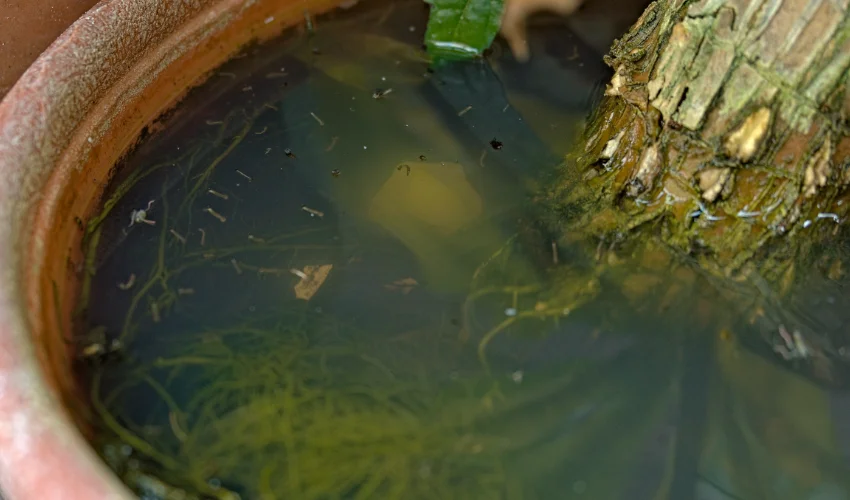
Mosquito larvae are commonly called “wigglers” because of their side-to-side movements. They look like tiny worms and can appear in colors ranging from beige to brown. They live only in water and can even survive in minimal amounts, which makes them hard to detect.
It’s easy to confuse them with tadpoles when first seen. Tadpoles are larger and have smooth tails, while mosquito larvae have distinct segments. Watching their movement patterns can also help distinguish them.
Understanding these differences makes telling the two apart simpler. Careful observation ensures you can identify larvae before they mature.
At Arrow Environmental Services, we’re always ready to help you with your pest control needs. Contact us for a free, no obligation quote, or call us at 800-226-3139 to get started today.
Leave your information below and we’ll be in touch shortly. After hours calls will be returned the next business day.
Will Removing Standing Water Eliminate Mosquito Larvae?
Yes, mosquito larvae in any container with standing water, such as birdbaths or wheelbarrows, can be eliminated by removing standing water by pouring it onto dry soil. This simple method works quickly because the larvae cannot survive without water, and it’s safe for small water sources. Homeowners can perform this task themselves with minimal effort.
Larvae can survive in very small amounts of water, so careful removal is necessary. Emptying containers onto dry ground prevents more mosquitoes from developing, breaks the life cycle, and helps keep your yard more enjoyable during outdoor activities.
How Long Does It Take for Mosquito Larvae to Mature?
Female mosquitoes lay eggs that hatch within just 24 to 48 hours. During this short window, the eggs are highly susceptible, and removing standing water can stop their growth before larvae emerge. After hatching, larvae develop rapidly in water and usually become adult mosquitoes in one to two weeks. Acting quickly during this stage is key to effective mosquito control.
Experts in professional mosquito control can locate and treat breeding sites that are easy to overlook. Their treatments not only stop larvae from reaching adulthood but also help reduce the total mosquito population, keeping your outdoor spaces more comfortable and enjoyable.
Protect Your Home from Mosquitoes with Arrow Environmental Services
If mosquito larvae are becoming difficult to manage, it may be time to call in local mosquito control experts. Homeowners rely on professionals to find and treat hidden breeding areas. The team at Arrow Environmental Services works to eliminate every mosquito hotspot. Our mission is simple: stop mosquitoes from spreading and prevent eggs and larvae from growing into adults.
Don’t let mosquitoes take over your outdoor space! Reach out to Arrow Environmental Services and have the professionals get rid of them.